A pseudonym is a fake or alternative name that someone uses instead of their real name. People often search for the meaning of “pseudonym” after seeing it in books, online profiles, social media, or text conversations where someone mentions using a different name.
Although the word isn’t internet slang, it is commonly discussed on platforms like TikTok, Instagram, Snapchat, and X (formerly Twitter), especially when talking about authors, content creators, gamers, or people who want to stay anonymous online.
In this guide, you’ll learn what a pseudonym means, where people use it, real examples, and when it’s appropriate to use one.
1. Pseudonym Meaning – Quick Answer
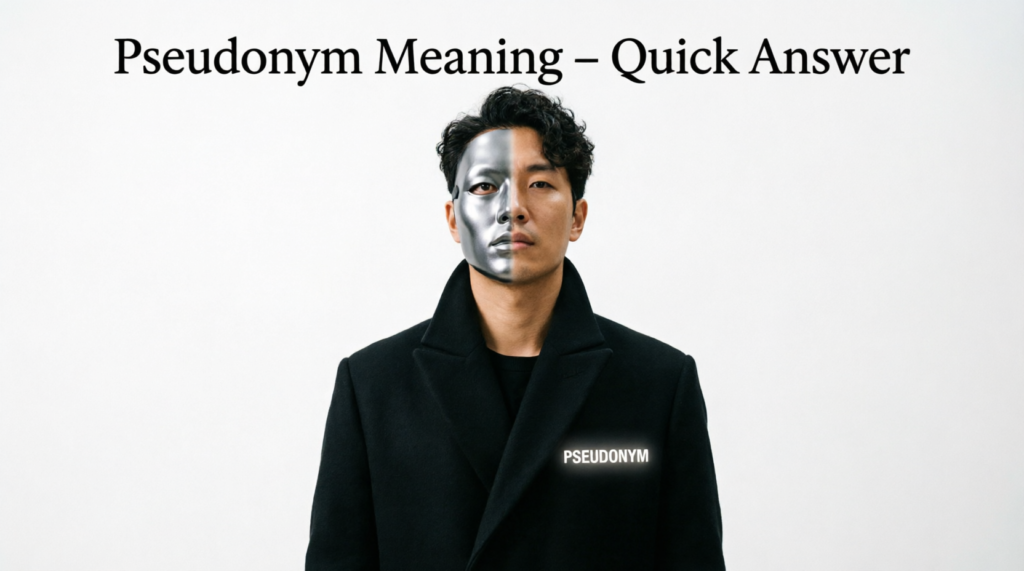
A pseudonym is a fake name used by a person instead of their real name.
People use it for privacy, creativity, or safety.
Simple Examples
- Mark Twain
→ Real name: Samuel Clemens
→ Used a pseudonym for writing - George Eliot
→ Real name: Mary Ann Evans
→ Used a male name to be taken seriously - Online gamer “ShadowX”
→ Real name hidden
→ Uses a pseudonym for identity protection
Each example shows the same idea: a chosen name instead of a real one.
2. The Origin of Pseudonym Meaning
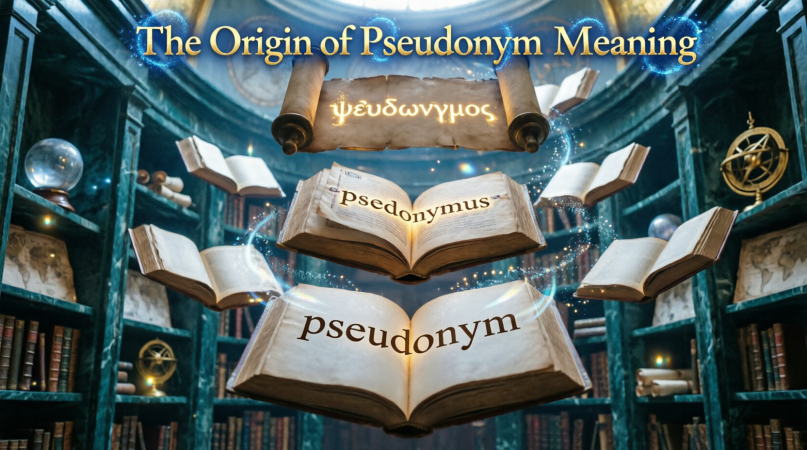
The word pseudonym comes from Greek.
- “Pseudo” = false
- “Onym” = name
So, the word literally means “false name.”
A Short History
People have used pseudonyms for centuries.
- Ancient writers sometimes hid their identity
- Women writers used male names in the past
- Political writers used pseudonyms for safety
Why Variations Exist
The word is spelled the same in most English forms, but people confuse it with:
- Nickname – casual, friendly name
- Alias – often used in legal or crime contexts
- Pen name – used by writers
These are related but not exactly the same.
3. British English vs American English
Good news: the word pseudonym is spelled the same in both British and American English.
But usage style can differ slightly.
Key Differences
| Feature | British English | American English |
|---|---|---|
| Spelling | pseudonym | pseudonym |
| Common use | Formal writing | Both formal and casual |
| Alternative term | pen name | pen name |
| Tone | Slightly formal | More flexible |
Practical Examples
- UK: “The author wrote under a pseudonym.”
- US: “He used a pseudonym online.”
Both are correct. The difference is mostly in tone, not spelling.
4. Which Version Should You Use?
Since the spelling is the same, the real question is about context.
Use Based on Audience
- United States
Use “pseudonym” in both formal and informal settings - United Kingdom
Use it mainly in formal or academic writing - Commonwealth Countries (Canada, Australia, etc.)
Same as UK, but flexible - Global Audience
“Pseudonym” is widely understood everywhere
Simple Advice
If you are unsure, use pseudonym. It is safe, correct, and professional.
5. Common Mistakes with Pseudonym Meaning
Many learners make small mistakes with this word.
Mistake 1: Confusing with Nickname
❌ “My pseudonym is Mike”
✔ “My nickname is Mike”
A nickname is informal. A pseudonym is more deliberate.
Mistake 2: Wrong Spelling
❌ “sudo name”
❌ “pseudoname”
✔ pseudonym
The spelling looks hard, but remember: pseudo + nym
Mistake 3: Using in Wrong Context
❌ “I use a pseudonym at home”
✔ “I use a pseudonym online”
A pseudonym is used when you want to hide or change identity.
Mistake 4: Mixing with Alias
- Alias = often legal or criminal use
- Pseudonym = creative or personal use
6. Pseudonym Meaning in Everyday Usage
You may think this word is only for writers. That is not true.
It appears in daily life more than you think.
1. Emails
People use pseudonyms in email names.
This hides real identity.
2. Social Media
Very common use.
Example:
Instagram: “TravelQueen”
Twitter: “TechGuru”
These are modern pseudonyms.
3. News & Blogs
Journalists sometimes use pseudonyms to stay safe.
Example:
A reporter in a conflict zone
4. Formal & Academic Writing
Used in research and literature.
Example:
“The author published under a pseudonym.”
5. Online Gaming
Almost everyone uses a pseudonym.
Example:
“DragonSlayer99”
7. Pseudonym Meaning – Global Usage
The use of pseudonyms depends on culture and context.
Country-wise Popularity
- USA – very common online and in media
- UK – common in literature and journalism
- India – popular among writers and bloggers
- Japan – widely used in manga and art
- Europe – common in digital spaces
Search Intent Explanation
People search pseudonym meaning because they want to:
- Understand the word clearly
- Use it correctly in writing
- Know the difference from similar words
- Learn when to use it
Context-Based Usage
- Creative writing → very common
- Online identity → extremely common
- Legal use → less common
- Casual talk → growing usage
8. Keyword Variations Comparison
Here are similar terms and how they differ.
| Word | Meaning | Usage |
|---|---|---|
| Pseudonym | False name | Writing, online identity |
| Pen name | Writer’s fake name | Books, articles |
| Alias | Alternate name | Legal or official use |
| Nickname | Informal name | Friends, family |
| Username | Digital name | Online accounts |
Key Insight
All are names, but purpose matters.
FAQs About Pseudonym Meaning
1. What is a pseudonym in simple words?
A pseudonym is a fake name someone chooses to use instead of their real name.
2. Is a pseudonym legal?
Yes, using a pseudonym is usually legal. But you cannot use it for fraud or crime.
3. Is a nickname a pseudonym?
No. A nickname is informal. A pseudonym is used more seriously or publicly.
4. Why do writers use pseudonyms?
They use them for privacy, freedom, or to reach a different audience.
5. Can I use a pseudonym online?
Yes. Many people use pseudonyms on social media and gaming platforms.
6. What is another word for pseudonym?
Common alternatives are pen name and alias, but they have slightly different meanings.
7. How do I create a pseudonym?
Choose a name that is easy to remember, fits your purpose, and does not copy someone else.
Conclusion
Understanding the pseudonym meaning is easier than it first seems. It simply refers to a false or alternate name used instead of a real one.
We explored its origin, usage, and differences from similar words. You also saw how it appears in daily life—from books to social media.
The key takeaway is this: use pseudonym when someone intentionally chooses another name, often for privacy or creativity.
In today’s digital world, pseudonyms are more relevant than ever. Whether you are writing, posting online, or creating content, knowing this term helps you communicate clearly.
Keep your usage simple. Use it where it fits. And always choose clarity over complexity.
discovr more post
What Does Lysis Meaning in Text? 2026
What Does Flourish Meaning in Text? 2026
What Does Feather Meaning in Text? 2026

Emma is a creative content writer, digital storyteller, and online educator known for crafting clear, engaging, and SEO-friendly articles that help readers learn, grow, and stay inspired. With a passion for writing that connects with real people, Emma writes practical guides, language tips, lifestyle content, and helpful how-tos that readers of all ages can enjoy.